

New commercial agreement combines immersive digital exhibition expansion, exclusive merchandise rights and Hui10’s established Lucky World commerce platform.
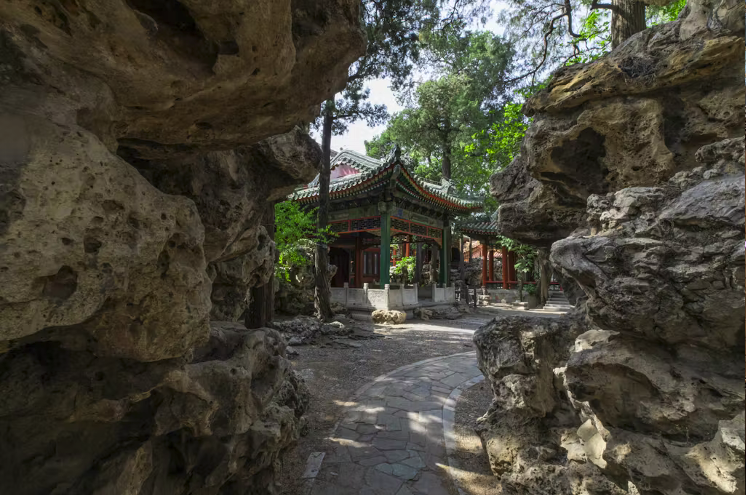
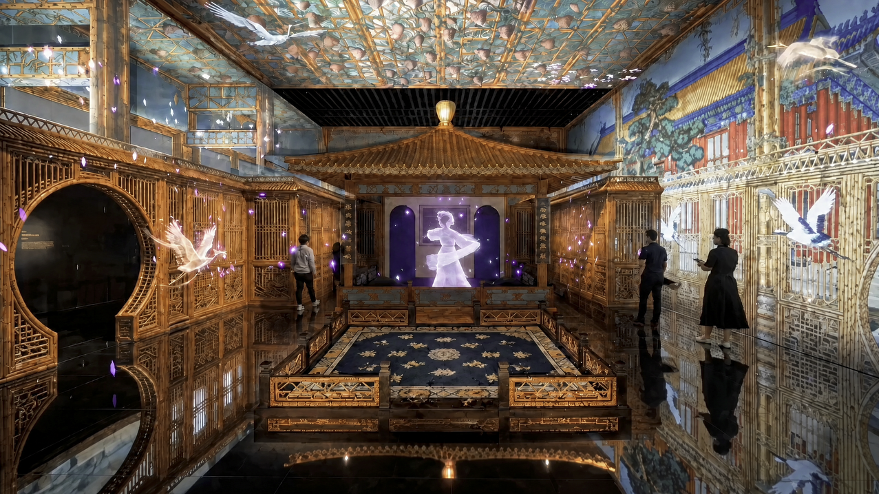
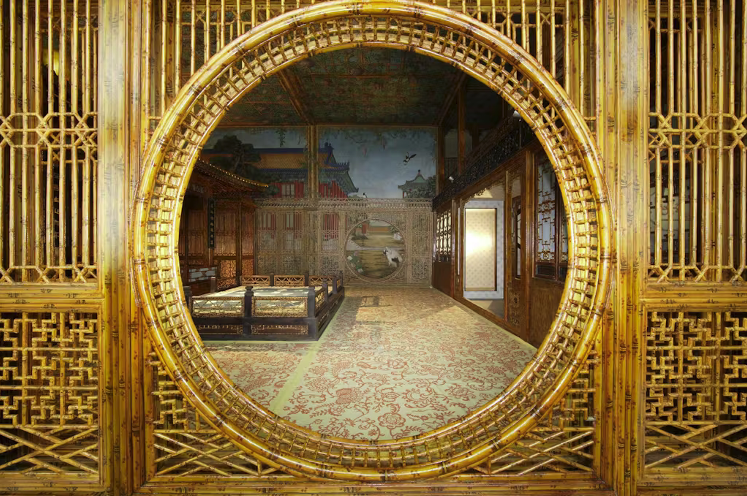
The Qianlong Garden and its immersive light-and-shadow exhibition at Beijing’s National Library
Qianlong Garden offers Hui10 an attractive opportunity to earn exhibition-related fees and develop distinctive merchandise while helping bring an exceptional part of China’s cultural heritage to wider audiences. Through Lucky World’s agreement, Hui10 can apply its established teams and commerce infrastructure to a project with commercial potential, public value and scope to deepen relationships with state-owned cultural partners and participating city governments.
Lucky World’s agreement with China Culture & Tourism (Beijing) Cultural Development Co., Ltd. gives it participation in specified fees from qualifying exhibition-expansion agreements and exclusive merchandise rights within the defined project scope. The agreement runs to 31 July 2030.
The same team that designs TEAM CHINA merchandise will develop the Qianlong Garden range with China Culture & Tourism, supported by the existing Weimeng mini-program e-commerce infrastructure. Hui10’s Shenzhen scratch-card design team is also developing digital artefact holographic scratch cards and potentially tradable digital artefact assets.
This is a practical extension of Hui10’s existing business, with shared design expertise and commerce infrastructure providing a foundation for converting cultural content into products and customer engagement without requiring a new standalone platform.
Why Qianlong Garden matters
Created between 1771 and 1776 as Emperor Qianlong’s private retirement retreat, Qianlong Garden is comprised of four courtyard complexes and 27 buildings within Beijing’s Forbidden City. It combines northern and southern Chinese garden traditions with imperial craftsmanship, creating a rich subject for merchandise inspired by its architecture, artworks and cultural history.
Its significance extends beyond landscape design. The Garden preserves rare eighteenth-century imperial interiors, including silk paintings, jade inlays and intricate bamboo carvings – blending traditional Chinese craftsmanship with European aesthetic influences. These offer an unusually intact window into the artistry and cultural life of China’s imperial court, making the site important to Chinese heritage as well as the wider history of art and design by seamlessly showcasing a global fusion of 18th century artistic techniques.
After conservation work dating from 2000, the Garden’s first two courtyards opened to the public on 30 September 2025. The wider Palace Museum reported 18.6 million visits in 2025. A separate immersive exhibition opened at Beijing’s National Library on 9 July 2026, with 15 immersive scenes and 17 interactive installations, and is scheduled to run until 6 December 2026. This digital touring format offers a way for audiences beyond Beijing to experience the Garden’s cultural content without adding visitor pressure to the conservation-sensitive original site.
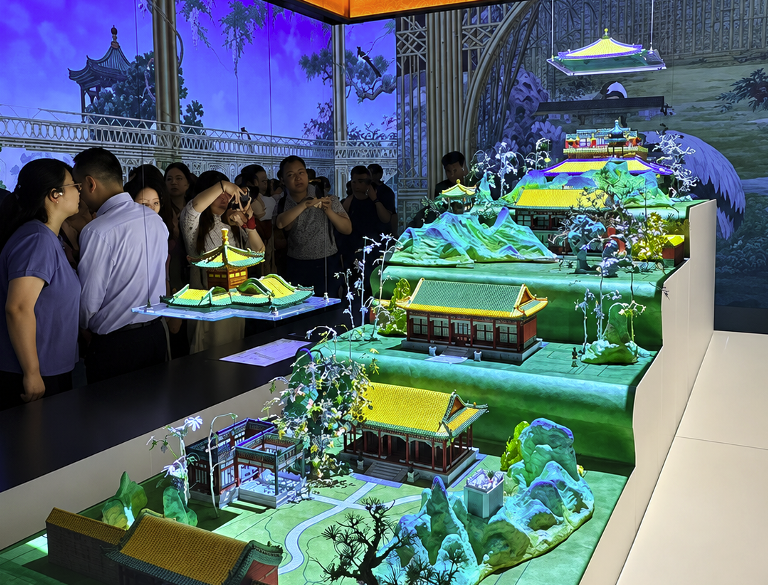
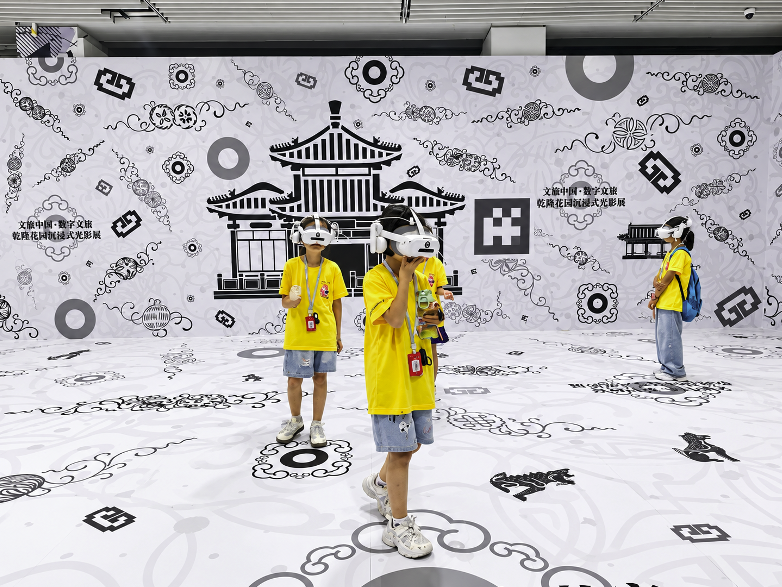
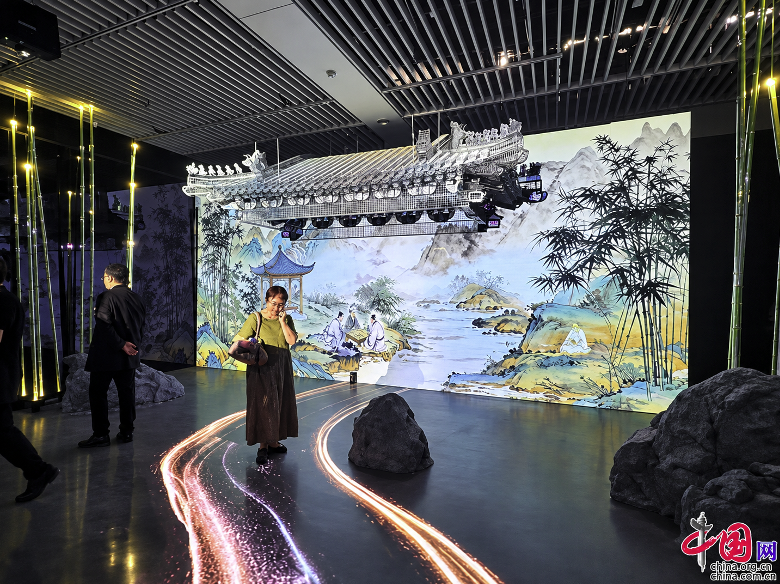
Left: a Qianlong Garden visual. Centre: an interactive exhibition installation. Right: the exhibition’s official visual.
First: a Qianlong Garden visual. Second: an interactive exhibition installation. Third: the exhibition’s official visual.
What Lucky World has secured
Within the defined scope, Lucky World is entitled to 50 per cent of specified IP-licensing and exhibition-design and construction-plan fees from qualifying expansion agreements with participating city governments. It also has exclusive rights to design, produce and sell authorised merchandise supplied through the project’s exhibition shops.
Turning defined rights into commercial activity
The commercial model combines participation in qualifying exhibition fees with merchandise sales. Each additional contracted exhibition can provide a new setting for visitors to discover the Garden’s stories and products. Authorised merchandise can extend that experience beyond the visit, connecting cultural interest with ongoing customer engagement.
The product-development work explores how the Garden’s architecture, decorative motifs and craftsmanship can inform contemporary merchandise. Hui10’s existing TEAM CHINA team and Weimeng infrastructure connect that creative work with commerce, giving the initiative a practical route from design to market within the authorised scope.
Alongside merchandise, the Shenzhen team is developing physical holographic scratch-card concepts linked to digital representations of Qianlong Garden artefacts. The initiative complements TEAM CHINA and Sports Lottery+ through shared capabilities while retaining its own contractual and commercial scope.
Building relationships through public value
China Culture & Tourism is wholly owned by China Culture Media Group, a central State-owned cultural enterprise supervised by the Ministry of Culture and Tourism. Partnering with China Culture & Tourism gives Hui10 an opportunity to demonstrate its contribution to the presentation and commercial development of Chinese cultural heritage. Successful delivery can deepen working relationships with cultural institutions and participating city governments, and provide a reference for future cooperation.
For public-sector partners, the opportunity is to make cultural heritage more accessible while creating an attraction around which local visitor activity and cultural consumption can develop. For the public, immersive interpretation and thoughtfully designed merchandise can make the Garden’s art and craftsmanship easier to discover and enjoy. Hui10 aims to earn recognition as a useful delivery partner by making those benefits visible in practice.
Execution focus
Management’s immediate priorities are qualifying exhibition agreements, an appealing merchandise range and reliable production and fulfilment. Commercial progress will be measured through fees received, merchandise sales, margins and cash generation. Visitor engagement and partner feedback can also help demonstrate the contribution to public access and the quality of the relationship.
Daniel Levine, Chief Executive Officer of AC8, said:
“Qianlong Garden gives us an opportunity to build a valuable commercial business while helping more people experience an exceptional part of China’s cultural heritage. We can bring the same TEAM CHINA merchandise team, our established Weimeng commerce infrastructure and our Shenzhen scratch-card design expertise to that task. By delivering well for our cultural partners and participating cities, we aim to deepen relationships and demonstrate the practical contribution Hui10 can make to cultural access and local visitor economies. Our focus is to turn that shared ambition into successful exhibitions, appealing products and sustainable commercial returns.”
Discover more from Hui10 Inc
Subscribe to get the latest posts sent to your email.